EXCLUSIVE: “Boom or bust”: turning maritime innovation into investment
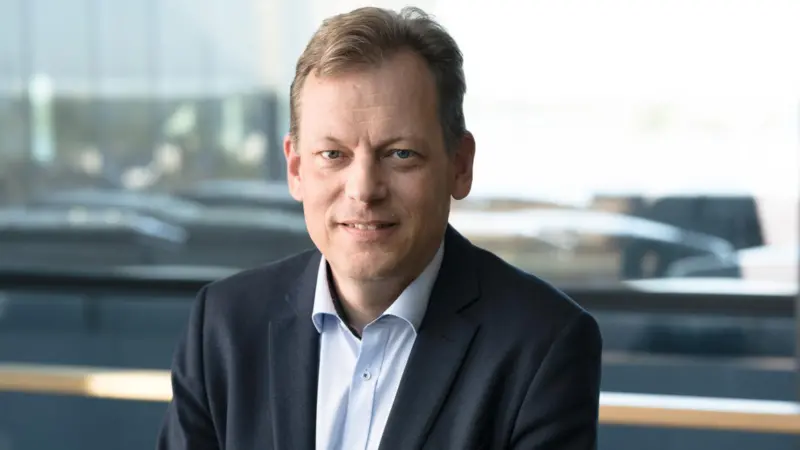
Joshua Berger, founder and CEO of Maritime Blue speaks to The Motorship about how the maritime industry needs regulatory certainty and collaboration for companies to commit to sustainability efforts.
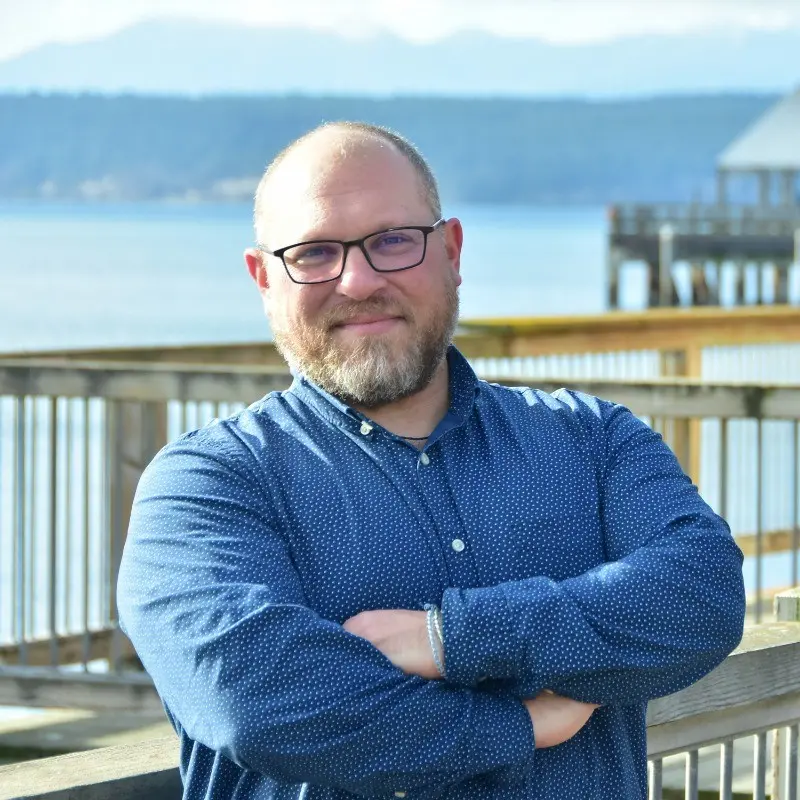
The maritime industry faces a contradiction: decarbonisation requires sustained investment and yet repeated economic disruptions can make long-term commitments difficult.
For Joshua Berger, founder and CEO of Seattle-based Maritime Blue, the maritime industry is “suspect to disruptions, major disruptions”.
“It feels like we are consistently on a sort of boom or bust cycle of the type of investments that are necessary to really bring this industry into transition”, he says, pointing to recent geopolitical tensions and the Covid-19 pandemic as examples of the disruption that can undermine investment.
Maritime Blue is an innovation cluster organisation that brings together numerous stakeholders across government, industry, research and finance to accelerate maritime innovation. Berger believes that this model of organisation, which he says in less common in the U.S, can help to turn promising sustainability solutions into commercially viable products and businesses.
Regulatory certainty and commercial barriers
Beyond geopolitical instability and supply-chain disruption, the difficulty of relying on consistent public-sector funding also presents a challenge. As Berger explains, “it is very hard for the private sector to make those long-term investments and rely on public funding”, making it harder for businesses to plan and commit their own capital.
For Berger, breaking this cycle requires greater certainty around the direction of maritime decarbonisation. He argues that companies need confidence in regulatory framework before committing to the vast investment needed to bring new technologies and alternative fuels to market.
“I feel it is inevitable that we will have an international scheme for decarbonisation,” he says. “The EU is already acting. Asia is already investing. It will happen with cuts and bruises and scrapes politically, but it will happen. And so, we need regulatory certainty. The industry needs regulatory certainty.”
Berger finds that a clear regulatory framework as well as “a pricing mechanism” would help incentivize the major investments needed to happen to keep sustainable efforts ongoing.
And yet, Berger also finds that the industry will need to rethink the commercial and business models that underpin the maritime industry.
When The Motorship asked Berger how he believes sustainable solutions could become commercially viable, he said, “we’re going to need some new business models. We’re not used to having a multi-fuel future in the industry and that’s going to require different incentives in procurement […] in chartering” as well as “different business models on shipping routes.”
Innovation clusters: “I think we need one of those”
For Berger, innovation clusters offer a way to address these challenges by bringing together the different stakeholders needed to turn promising technologies into viable commercial solutions.
Berger explains how the company came into fruition, “we went to the Nordics and across Europe and UK […] regions layering public and private capital” which had in place “incentive-based policies, supporting early-stage innovation”.
He noticed “they all had these things called innovation clusters, and so we said, well, I think we need one of those.”
“And so, we spun it out of the state government at that time into an independent organisation that really serves that model of being a catalyst between government and industry and research and capital providers and community interests to really be the accelerant the Blue Economy and maritime innovation needs”.
For Berger, Maritimes Blue’s position makes them uniquely positioned to bring together different stakeholders because “we have this whole system view”.
Sustainable Maritime Fuels Collaborative is a key example of this for Berger, where Maritime Blue acts as facilitator across a range of bodies, such as vessel operators, fuel producers, developers, to “accelerate the production and use of sustainable maritime fuels in our region” so they can be part of a larger global conversation.
When questioned over specific examples of when Maritime Blue has facilitated beneficial conversation, Berger pointed to how “we are about to produce a policy and impediments roadmap for production and use of sustainable maritime fuels.”
“And that is being produced by all of those stakeholders and those who are being impacted collectively, and they will put forward policy recommendations, technology needs, necessary demonstration projects with consensus.”
Financing the transition: who bears responsibility?
Bringing maritime innovations to commercial scale also raises the question of how they should be financed. Berger argues that responsibility must be shared across the public and private sectors, with philanthropic capital also playing a role in helping projects progress.
Maritime Blue works to connect projects with potential funding partners, from government grants and venture capital to philanthropic organisations. By understanding the different priorities of these funders, the organisation can help bring capital providers and project partners together to identify suitable funding opportunities.
“When we see these key projects or needs come along, we can say I know this is what we might be able to build,” Berger explains. “And we can bring both the capital partners and project partners together and start to understand where that’s going to fit.”
The challenge, he suggests, is matching the right type of capital to the right project. Different initiatives have different funding requirements, and combining sources of finance can help support the infrastructure and demonstrations needed to advance maritime decarbonisation.
Maritime Blue has applied its collaborative approach to digital infrastructure. One initiative brought maritime manufacturers and terminal operators together around a shared private 5G network, creating the connectivity needed to support new digital applications.
“Enterprise scale private networks gave us the ability to build in a shared platform so that multiple terminal operators and maritime manufacturers could utilise the shared infrastructure.”
“We built a 5G network spanning multiple different yards and terminals and then could start introducing high-speed connectivity and on-site edge computing.”
The project illustrates how collaboration across the maritime sector can help address shared infrastructure challenges, bringing businesses and technology providers together around solutions that individual organisations may struggle to develop alone.
Ultimately, Berger believes breaking the maritime industry’s boom-or-bust investment cycle will depend on bringing the right partners, policies and capital together.
“We fundamentally believe that it is a shared responsibility, and there are different types of capital out there. We need to bring that in at the right time and at the right place”.