




The commercial proposition: Building a case for nuclear shipping
Greg Brostowicz, head of communications and marketing at AMPERA, speaks to The Motorship about the company’s emerging nuclear technology and its commercial viability.

The Florida-based advanced energy company is developing modular power systems for maritime applications, with the long-term aim of bringing nuclear power to commercial shipping.
Ampera’s proposed system combines a thorium-based subcritical reactor with helium cooling and supercritical CO₂ power cycle. The company says the combination is intended to deliver a compact, modular power system, with a sealed reactor core designed to operate for up to 30 years without refuelling.
Greg Brostowicz, head of marketing and communications, describes Ampera as an “advanced energy company”, rather than one focused exclusively on nuclear power. Its integrated architecture comprises a heat source, a power-generation system and a cooling or heat-recovery module.
“The power generation system, it’s going to be consistent, whether it’s nuclear or liquid natural gas or hydrogen,” he says.
Brostowicz adds that “two-thirds of the system will be agnostic to the heat source”, allowing AMPERA to pursue non-nuclear applications while developing its longer-term nuclear technology.
A key distinction in AMPERA’s approach is its use of a subcritical reactor. Brostowicz says the system uses an external neutron source to initiate fission within a sealed core, with the reaction stopping when the neutron source is switched off.
“We cannot scientifically have a meltdown or a runaway reaction,” he says, describing what he sees as a fundamental safety advantage of the design.
The commercial case
With alternative fuels and power systems competing to decarbonise shipping, nuclear must find a way to stand apart from other competitors.
Brostowicz places one argument for nuclear in the lack of recurring fuel expenditure.
“We’re designing for up to 30 years,” Brostowicz says, describing the intended operating life without refuelling or engine maintenance.
Fuel storage is another consideration. “Right now, a lot of the weight for a cargo ship is the fuel that it’s carrying,” Brostowicz says. He also identifies the potential to reduce machinery-space requirements: “the size of the engine room could be greatly reduced”, which could create opportunities to use onboard space for cargo or other purposes.
AMPERA puts figures against these potential benefits, estimating annual fuel savings of US$12.1 million to US$16.7 million and approximately 2,600 m³ of bunker volume released.
A staged route to deployment
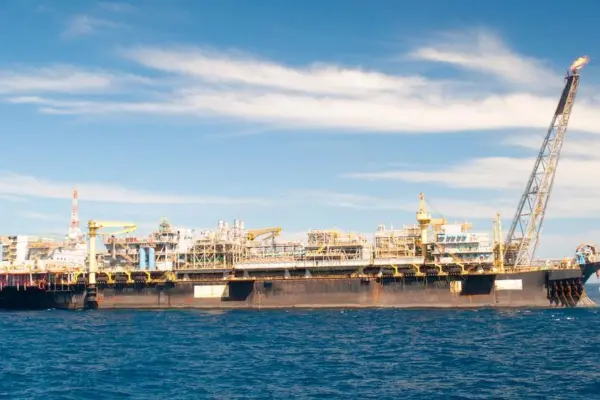
AMPERA plans to pursue a staged route to nuclear deployment, from port-side installation to power barges and floating installations, with the hope to finally install nuclear-powered merchant vessels.
“The first is port side power,” Brostowicz says. “The second would be really like floating platform, and the third would be merchant propulsion.”
The company refers to this as a “natural evolution”, especially considering “licencing for on-land applications is anticipated to occur more quickly than on-sea”.
AMPERA highlighted how it has “begun the pre-application process with the U.S Nuclear Reactor Agency”.
The commercial proposition has already attracted industry backing. In April 2026, Scorpio Tankers announced a US$10 million investment in AMPERA and a strategic collaboration to develop micronuclear power solutions for maritime applications, initially targeting floating nuclear power barges before progressing towards commercial vessels.

Related Articles
 ALTERNATIVE FUELS & LUBRICANTS
 ALTERNATIVE FUELS & LUBRICANTS
 NUCLEAR