

Exclusive: Bridging the LNG gap
Jake Digel, CEO of REV LNG, speaks to The Motorship about the company’s truck-to-ship bunkering operations and expanding LNG availability in ports with limited infrastructure.
The lack of established LNG bunkering infrastructure across the US Northeast presents a challenge for vessels looking to access the fuel at ports of call.
“The LNG market has received a lot of attention in the Northeast, but due to lack of shore-side infrastructure, customers have not been able to secure reliable supply.”.
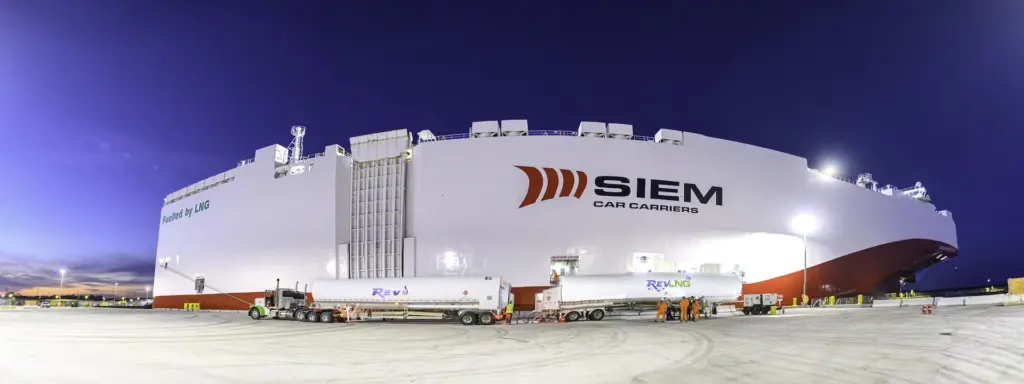
For REV LNG, the solution lies in truck-to-ship bunkering, bringing LNG directly to vessels at ports without dedicated facilities. The company’s recent operation at Davisville, Rhode Island, demonstrates how alternative fuel supply can be established ahead of investment in permanent infrastructure.
“We find a need and we solve a problem,” Digel says of the company’s approach.
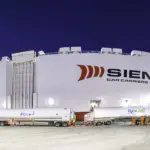
Digel explains that REV identified an opportunity at Davisville because LNG-fuelled vessels calling at the port, including those operated by Siem Car Carriers, offered a potential source of demand. He notes that Davisville had no existing LNG bunkering infrastructure, with facilities more established further south, particularly in Georgia and Florida.
REV subsequently partnered with Siem Car Carriers, whose dedicated trade routes include regular calls at Davisville with LNG-fuelled vessels.
“We knew Siem had a need, and we also knew they’d be willing to work with us through the development process.”
Identifying a customer with demand was only part of the equation. REV also needed the port and local stakeholders to support the introduction of a new bunkering operation.
Unlike established LNG bunkering operations, which can rely on dedicated shoreside storage and bunkering barges, REV’s approach uses an existing inland supply network to serve ports without this infrastructure.
Based in Pennsylvania, REV sources LNG from established supply points before transporting it to the port using its own fleet of trucks. Its technicians then manage the transfer from the trucks to the vessel at the pier.
“REV is focused on continuing our reputation to provide our customers with safe, repeatable and reliable services. Our work in developing new marine markets is no different,” Digel explains.
Establishing the Davisville operation required significant engagement with local stakeholders. REV worked with the Port, the US Coast Guard, and local authorities including the fire marshal and police.
For Digel, “safety is always the first and foremost priority”. REV’s existing safety record was therefore important in building confidence among local authorities and the wider community.
“When you have a ten-year track record of establishing yourself as a safe and reliable operator, you can go into new communities and tell your story, knowing that people can vouch for your reputation,” Digel explains.
Digel says this involved arranging informal meetings with local authorities and emergency services, explaining the operation and building relationships before making any formal requests.
“You really have to establish a rapport. It’s not proprietary; it’s just responsible, and it takes time.”
Safety considerations extend across the whole operation, from transporting LNG by road to the movement of trucks within the port and the transfer of fuel to the vessel.
REV says it was the first company to develop LNG bunkering on the Great Lakes. The company introduced truck-to-ship LNG bunkering in Hamilton, Ontario, in 2020 and has since completed more than 90 individual fuel deliveries, working with several customers.
At Davisville, four bunkering operations have now been completed, with a fifth scheduled.
Davisville already has several of the foundations for long-term shoreside infrastructure, including regular calls from LNG-fuelled vessels, an established supplier and cooperation from the port and regulators. However, a permanent facility would depend on securing the investment and long-term customer commitments needed to make it commercially viable.
“You have to start slow and prove that it works. Prove customers want to buy it. Prove the port will work with a supplier like us. Prove the Coast Guard will work with you,” Digel says.
For REV, the priority is making the fuel available where vessels need it. As Digel puts it: “When you get it going, infrastructure will follow.”

Related Articles
 NUCLEAR
 COATINGS (GENERAL)
 PROPULSION